
by Walt Stoner
At the end of the 1960s, the Museum owned three streetcars, stored in three locations in two countries, and had no place to call home. By the end of the 1970s, it had a home, an abandoned interurban right-of-way adequate for car storage, but not wide enough for buildings. Our collection consisted of eleven cars, ten of which were stored on the right-of-way with the eleventh on a nearby siding. By the end of the 1980s, the Museum had grown dramatically in just about every measurable aspect of the Museum.
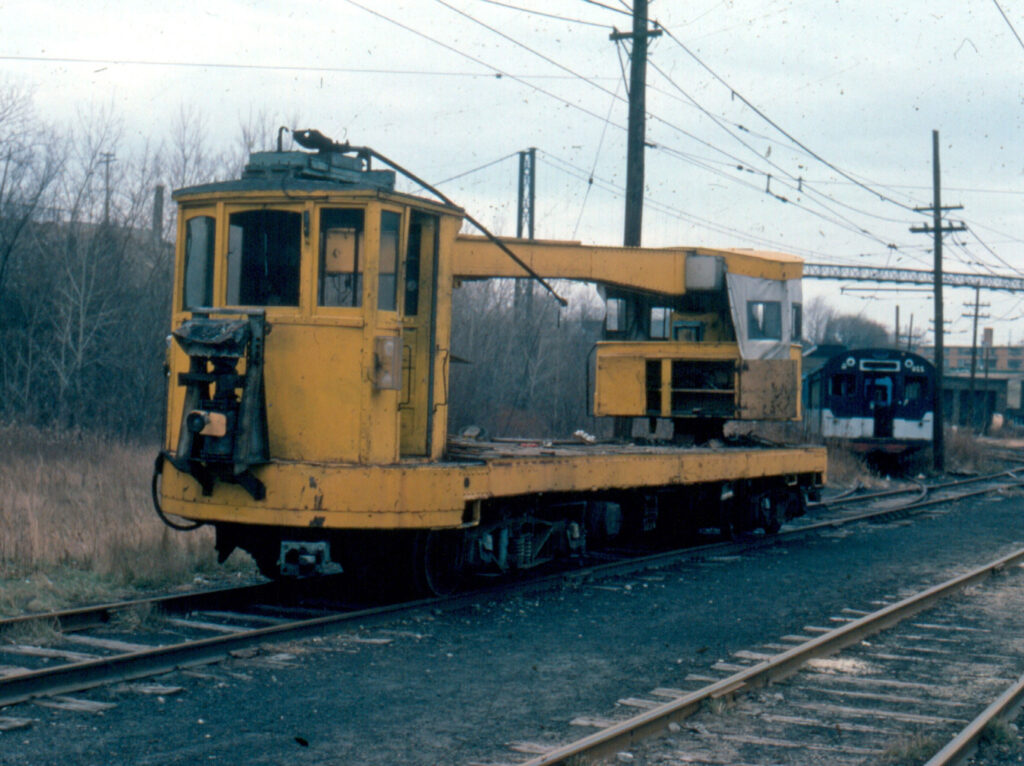
Throughout the 1980s, our streetcar collection grew from eleven pieces to forty-six. The primary reason for this growth was The Greater Cleveland Regional Transit Authority (RTA). In the mid-1970s, RTA took over the operations of the Cleveland Transit System (CTS), the Shaker Heights Rapid Transit (SHRT) and several regional bus lines. In the 1980s, RTA began replacing just about all of its rail cars. This included cars in the CTS St Louis rapid transit fleet, the SHRT PCC fleet and most of the work equipment. Of the thirty-eight cars acquired in the 1980s, twenty-one were from RTA. It started with the work equipment. In 1980 we acquired former Cleveland Railway Company (CRC) Differential crane 0711. In 1981, we acquired five more work cars (which we moved in two days) including crane 0710, flat cars 0610, 0611 and 0615, and wrecker car 11. In 1983 we acquired three of the former CTS PCCs that had been sold to Toronto in the 1950s and returned to RTA in the 1970s.
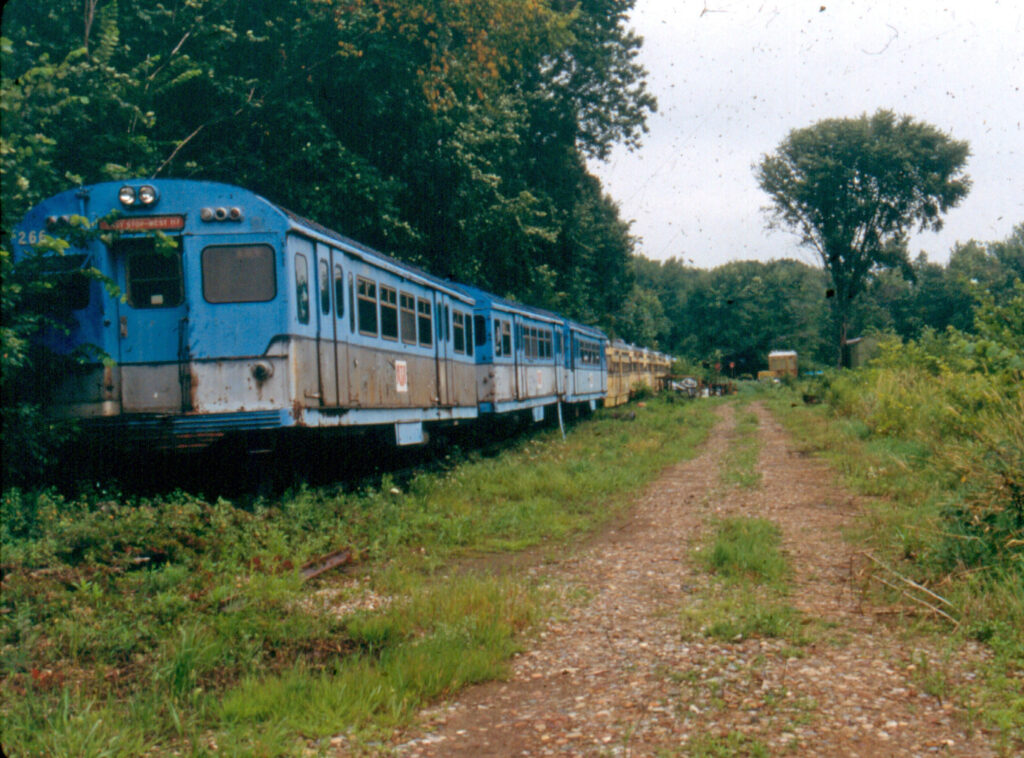
Cars 4655 and 4656 were moved to the Museum. Car 4256 had been damaged in an accident, so we scrapped it at Kingsbury yard for spare part for the other two. In 1985, the Shaker’s PCC fleet was sold off in groups. From the first group the Museum acquired car 86. In 1987, four more PCCs (49, 72, 78 and 92) were acquired and moved to the Museum. Through trades with other Museums, we also picked up PCC cars 81 and 83. Finally in 1988, RTA began disposing of the CTS St Louis fleet. The Museum acquired single car 112 and two married pairs, 201-202 and 265-266.
In 1980, a wooden caboose, Pittsburgh and Shawmut 165, was donated. It was on a siding in Medina, so we picked up the rent on the siding and left it there. Later in 1980 a wooden railroad passenger car, Philadelphia and Reading 1088, was donated. It was moved by rail from Navarre, Ohio to the siding in Medina by the caboose. In 1983, a 30-ton Plymouth locomotive was donated, and it too was placed on that siding. In 1984 three Philadelphia Broad Street subway cars, 14, 70 and 124, were donated. These were originally obtained as parts cars, but that proved to be a mistake. The cars were moved to Chippewa Lake and placed on the abandoned CSX track that went into Medina.
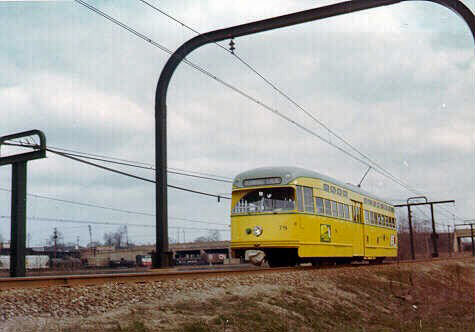
Shaker PCCs acquired in 1987
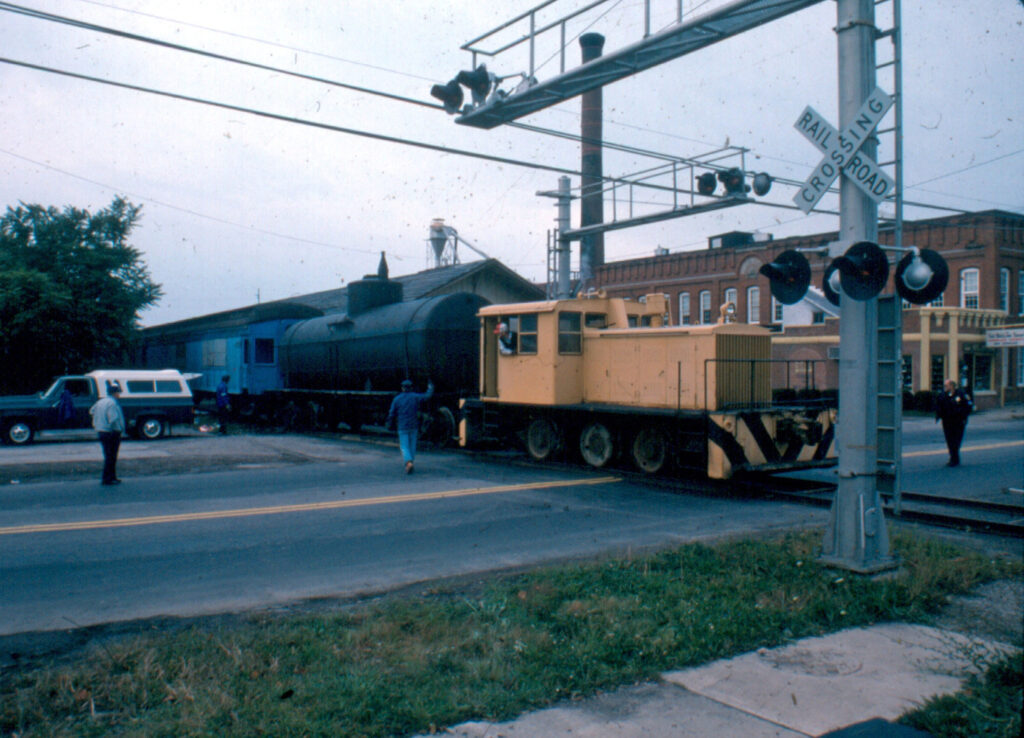
At that point we had seven cars in three locations on the abandoned CSX track. About that time the city of Medina, assuming the line was abandoned, decided to pull up the crossing on route 18, a few feet south of our siding with the caboose, the passenger car and the locomotive, leaving them stranded. Rumor was that the track to Chippewa Lake had been sold. We had to do something—fast. But first, we acquired another car, a tank car, CSOX 2565, that had been sitting at A. I. Root for as long as anyone could remember. That was moved to the siding with our other equipment. We then contacted the mayor of Medina to ask his permission to let us close Route 18 and lay rails on the pavement to reconnect the old line. Using the 30-ton Plymouth for power, we pushed the caboose, the passenger car and the tank car across the temporary track. Once the whole train was on the other side, we pulled up the temporary track behind us.
With all of our Medina cars on live rail, we ran the train down to Chippewa Lake. At Chippewa Road there was a siding north of the road where the CTA car that we acquired in 1979 was stored. On the main line south of the road were the three Philadelphia subway cars acquired the year before. As we approached Chippewa Road, we picked up the Chicago car and added it to our train. We then ran the train across the road and finally everything was together. A few months later the locomotive was sold leaving a rather unique string of cars up near the road. In 1986, with the track being pulled up, the cars were moved closer to Lake Junction, where the Medina line branched off the CSX mainline. In 1987, vandals set fire to the P&S caboose, all but destroying the car. It would be the next decade before these cars made it to the Museum.
Throughout the 1980s a number of other pieces of equipment came our way. These included: Chicago Rapid Transit control trailer 4043, acquired in a trade with another Museum; B&O transfer caboose C496 that was loaned to us; a GE 25 ton locomotive from Cincinnati; the body of Northern Ohio Traction & Light 1515 was moved from Mogador; the body of Lake Shore Electric 181 was moved from Vermillion; a flat car was purchased and scrapped at Kingsbury yard giving us a pair of arch bar trucks; a 2TM Trackmobile was acquired from government surplus; Pittsburgh PCC 1644 was acquired; and finally four very dilapidated Cleveland Southwestern freight car bodies were brought in,–motor 51 and trailers 503, 512 and 514. We started the decade with eleven cars, added thirty-eight more and disposed of three others. That should pretty much qualify as dramatic growth.
So where did we put all this new equipment? As you probably guessed, we bought some adjacent land. The search for a piece of land adjacent to our CSW right-of-way began just about as soon as we bought the right-of-way. Our criteria was rather simple—we needed at least ten acres; it had to be relatively flat; and it had to have easy road access to get visitors and streetcars onto it. In 1984, due to the death of the landowner, about 400 acres came available. Fortunately, the lawyers for the estate were willing to sell it off in smaller size pieces. The price was right, and it was right across Buffham Road from our current storage area. We bought the thirty-acre parcel that we now call our main campus. Financially, one of our directors took out a loan, he paid the loan, and we paid him. We also sold our 30-ton Plymouth for the down payment. Most of 1985 was devoted to developing a master plan for the property. That plan is still in effect today with very few changes.
Our demonstration railroad grew in several areas. At the end of the 1970s, the Museum had about 300 feet of track. At the end of the 1980s, we had about 2,000 feet of track. The 300-foot section on the south side of Buffham Road was extended in both directions. An additional 700 feet of track was built where the CSW mail line had originally been. In 1986 the first track was built on the new property. It was eventually extended to about 1,000 feet. Throughout the 1980s, several railroad sidings were taken apart and the rail and ties brought to the Museum.
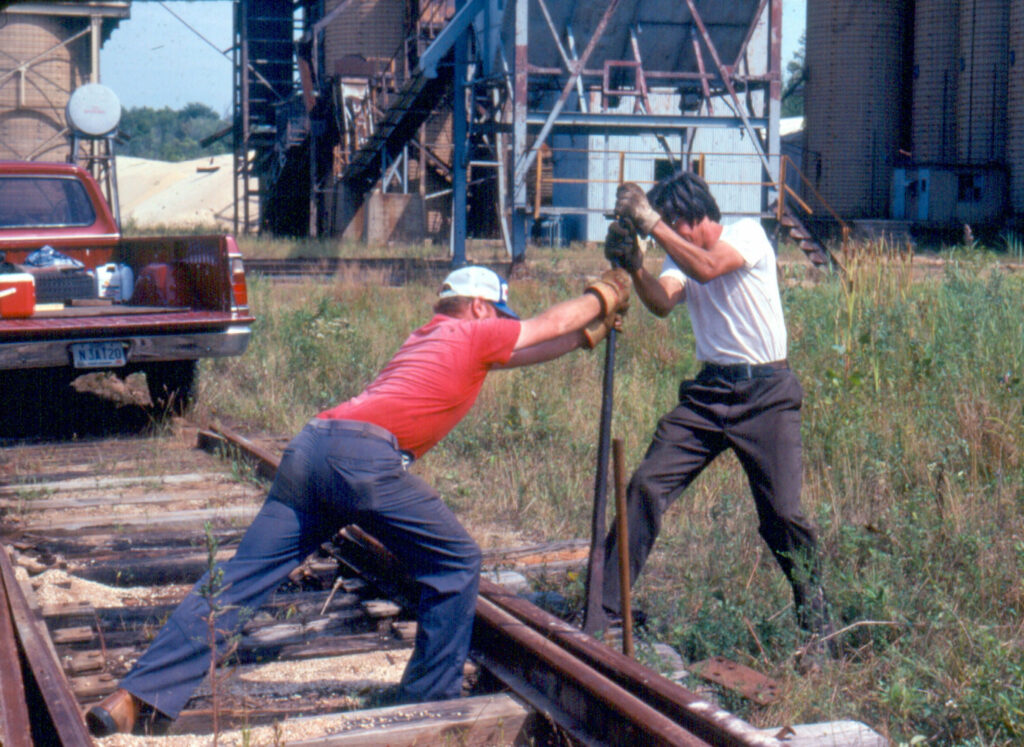
The largest of these was from the Pittsburgh Glass Sand company in Garrettsville, Ohio. The company had previously been served by the Erie Lackawanna Railroad, but when Conrail took over, the EL line was abandoned leaving PSG stranded. The Museum approached PSG with the idea of donating all their track and they agreed. In all, the Museum received about a mile and a half of rail and other materials. This project took most of 1983 and 1984. Before we were done, PSG even donated their 30-ton Plymouth locomotive to us. In addition to track materials, the Museum also acquired semaphore signals from the abandoned EL, and several truckloads of overhead hardware acquired from RTA.
Buildings. No, we did not put up any buildings in the 1980s, but we did take one down. A forty by one-hundred- and twenty-foot Quonset building was donated in 1981. We spent most of that summer taking it down. Once down, we needed a place to store it. The year before we had acquired a wooden railroad passenger car and moved it to Medina. The car had been previously gutted for MOW use by the railroad. It was big enough, so we moved all of the building’s parts, and ribs and siding to the passenger car. This led to a running joke—most museums kept their cars in a carbarn, we kept our carbarn in a car.
We had a modest increase in our membership, from 157 to 168. We ran several fan trips—to Pittsburgh in 1980, to Toronto in 1981, on the RTA Shaker lines in 1983, to Pittsburgh again in 1985 and to Toronto again in 1986. Our museum store and display were set up at railroad shows in several local malls. At the 1987 annual picnic, we ran our first streetcar for the members. It was one on the Shaker PCCs being pushed back and forth by the Trackmobile.

The Museum grew organizationally in the 1980s. In the early 1980s we rewrote our Bylaws. In 1976 we had incorporated the Museum as an Ohio not-for-profit corporation. The Bylaws were updated to reflect the incorporation. Our Bylaws were tested in the late 1980s by the actions of one of our directors. He began collecting buses and decided that he could store them at the Museum. The Bylaws (even the original ones) clearly prohibit privately owned equipment on the property. At one point he had over twenty buses on the property near the road. I was getting calls from the township zoning people and even ended up with an IRS audit where the ownership of the buses was questioned. Despite our efforts to get the individual to remove the buses, he refused. We eventually turned this over to our lawyer and took the director to court. He was clearly in violation of our Bylaws and was eventually ordered to move the buses off the property. The good news is that he did find a new home for the buses and none were lost. The bad news is that this whole conflict took a toll on our volunteers. Many left and never came back. Some eventually did. The end result is that the Bylaws are the Bylaws and we all must follow them. It is a shame that such a productive decade had to end on such a sour note. But things got better in the 1990s.
| By the Numbers | 1989 |
|---|---|
| Members | 168 |
| Cars/Carbodies | 46 |
| Land (acres) | 40 |
| Track (total) | 2000 feet |
| Track (operating) | 0 |
| Overhead Wire | 0 |
| Buildings | 0 |
| Net Worth | $307,484 |