So, who doesn’t like a “freebie?” However, free rides could be an expense and a source of conflict for streetcar companies. In the earliest days, when car riding hadn’t become an established habit, a few companies started by offering free rides for the first week or two. All went well until the free period ended when some riders objected, sometimes strongly, when their “right” to a free ride ended. Of course, “free” rides also could occur when patrons managed to ride without paying their fare, and trolley operators spent much effort on making sure that all money was collected. Such car arrangements as the PAYE (pay as you enter) and Cleveland’s Peter Witt introduced his style of cars both to speed loading to reduce delay time for car loading and also to ensure that all fares were collected.
But, there was another type of free riding. Certain classes of people were allowed to ride without payment. It was common for lines to allow employees to ride without charge, especially when going to and from work. Officials from other lines often were given passes to ride for free as part of a mutual courtesy. Policemen in uniform commonly were carried without payment, often as part of the railway’s franchise agreement. But companies might allow this practice even when not required, both as good politics and because frequent presence of officers on cars could help to discourage unruliness among riders.
And, speaking of politics, political leaders might expect/be given free rides. Companies might accept this practice in a spirit of mutual “back scratching,” but it also could take the form of extorsion, with politicos “suggesting” free rides not only for themselves but for large numbers of their supporters. It became a sort of political patronage, paid for by the railway company. In early years of streetcar operation, when lines generally were quite profitable, this practice could be regarded as just a business expense. But, later, when profitability had dried up, it became a problem.
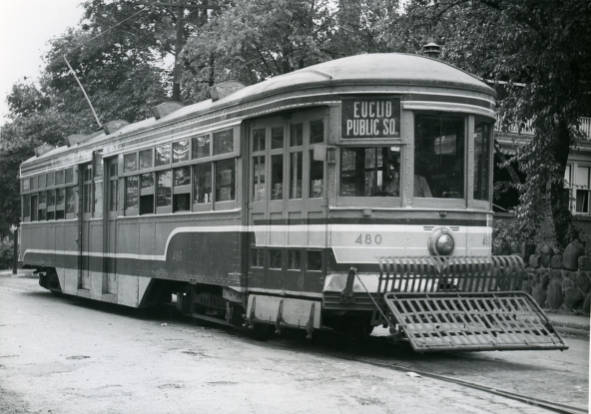
Picture, Columbus Metropolitan Library: An advantage of the Peter Witt design, such as CTE #480, was that it helped to ensure that riders paid their fares.