
We’ve previously discussed horsecars, the animal powered predecessor to the electric streetcar. The first such cars were introduced in New York City in 1833. Although they began to be replaced by electric cars in 1888, some continued to operate for many years more. Surprisingly, the last New York City horsecar ran until 1917! That’s more than 80 yeas that they were in use.
As we might expect from something in use for that long, car style varied over the years. Here are some examples.
A common early type of car was based on the typical omnibus that ran on the streets of the period. These cars lacked a rear platform, and passengers entered trough a door in the rear of the car. This design resulted in a very light car, but the lack of a platform meant that there was no convenient place for a conductor to stand while collecting fares. In some cases, as on omnibuses, conductors were dispensed with and fares were handed to the driver through an opening in the front of the car. Often, fares were missed in this system.
Because a car running on rails was much easier to pull than an omnibus that ran on the unpaved or cobblestone street, a slightly heavier car was possible. Therefore platforms were added, and typical horsecars of the later years resembled a small version of the standard railroad coach of the period.
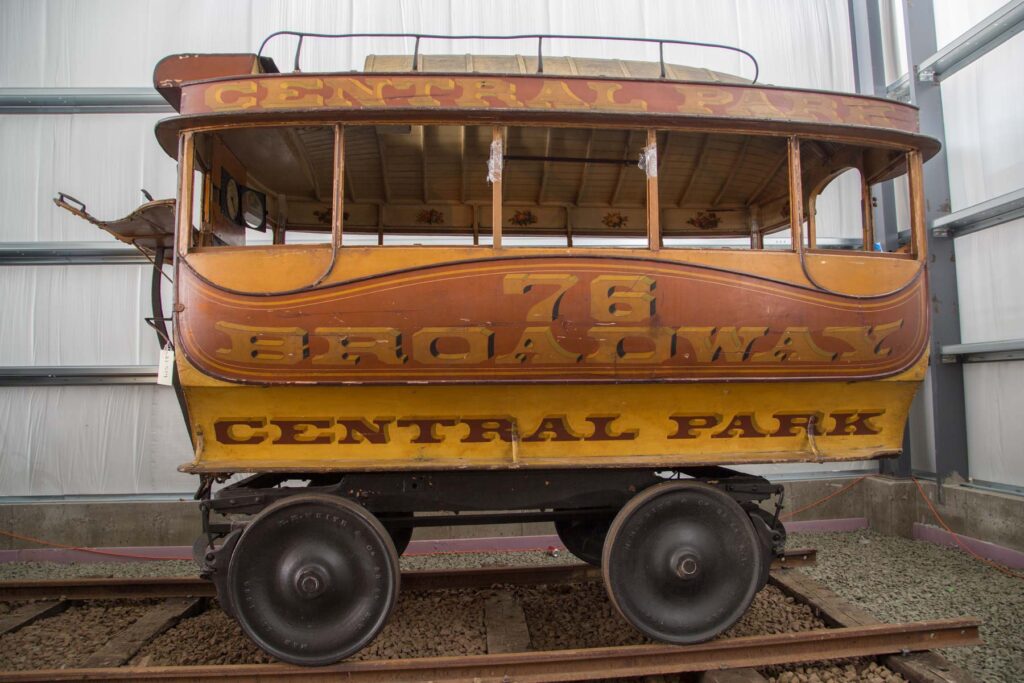
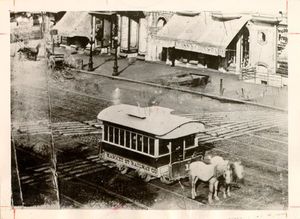
The first picture (Electric Railroaders Association) shows a New York City car of about 1860, located at our sister organization the Shoreline Trolley Museum in East Haven CT (and well worth a visit). Interestingly, this particular car is constructed so that the body can be reversed on the frame so that, at the end of the line, the car can run it the opposite direction without a turning loop. The second picture (Canton Historical Society) shows a typical 1880 horsecar in Canton OH.