by Walt Stoner
As the decade began, I was thinking what a great year 2020 was going to be. N.O.R.M. ended 2019 on a high note. We had just built a new substation that could run just about anything in our collection. We had just added an additional 600 feet of overhead trolley wire, doubling the length of our trolley rides. Everything was lining up nicely for a great year. And then the plague of the twenty-first century stopped our world dead in its tracks. Coronavirus (Covid-19), the worst epidemic in a hundred years changed life as we knew it. In March, we were looking at ways to make our visitor experience safer. By April, most all public outreach functions were cancelled—no trolley rides, no walking tours, no Museum Store, no media mornings, no public relations speakers. Any activity that involved the public was cancelled.
Work at the Museum did continue. Our small band of regular volunteers, the ones that put in two, three or more days a week, were there with their masks on. Car restoration and overhead work continued as normal. One of the biggest tasks was to install overhead wire on the carbarn lead and through the Bennett Carhouse. This mammoth job spanned a couple of years.
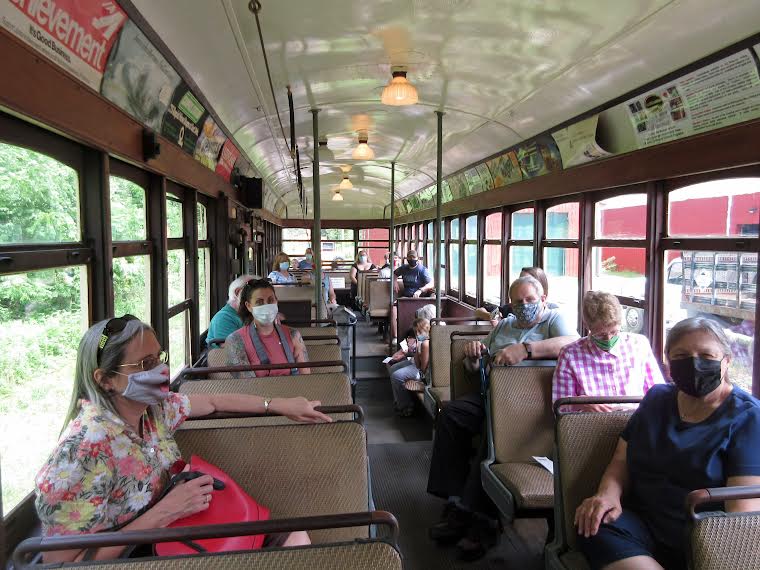
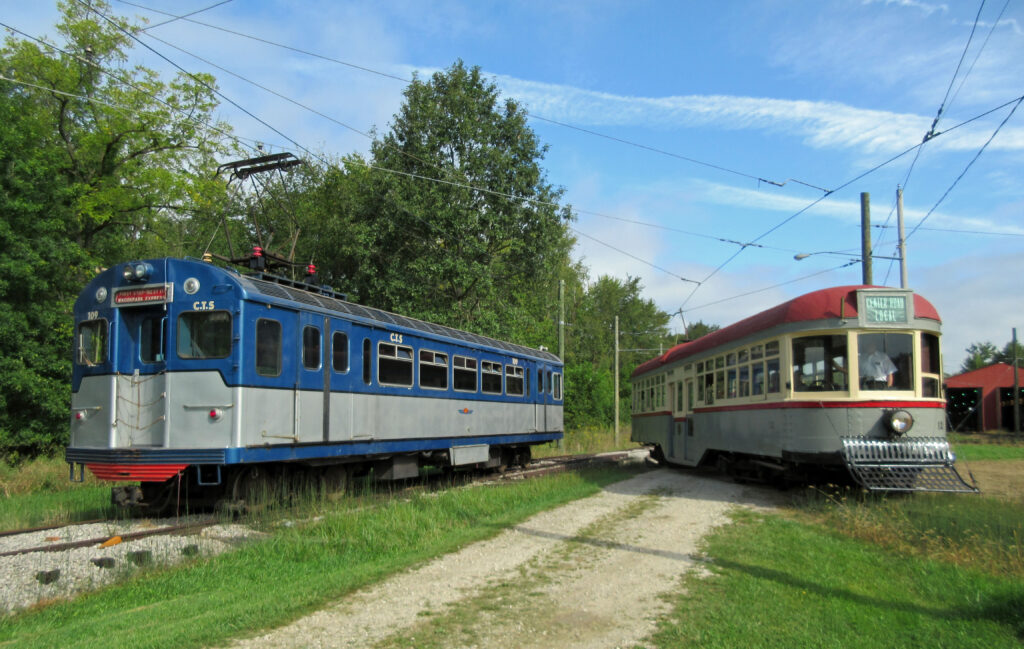
In early 2021, plans were made to reopen the Museum to the public. Covid was still going strong, but vaccines had been developed and people were returning to their normal lives. Public operation did not resume until early July of 2021. All volunteers wore masks and hand-washing stations were set up. The abbreviated operating season saw only sparse crowds on operating days. It was not until 2022 that we returned to any sense of normalcy. In 2023 CTS rapid car 109 was added to our trolley car operation. In 2024 it was fully integrated into the operation as we began two-car operation with Shaker car 12 running on the hour and CTS 109 on the half hour.
Throughout the decade, our primary operating car has been Shaker Rapid car 12. In 2021 its roof was repaired and the car was completely repainted. Other minor repairs were made as needed. Most of our car work went into Shaker car 303 and CTS rapid car 109. Slow progress was made on 303. CTS rapid car 109 was brought back to life and joined car 12 in our normal operation. Unlike cars 12 and 303, 109 is a PCC rapid car. This type of car requires a whole new set of skills. With the help of a couple of retired CTS employees, our volunteers got through the learning curve and 109 was brought back to life. One other car that saw attention was Shaker PCC car 92. This car sits out by our front gate and is the first car that visitors see. And what they were seeing was not good. The car was repainted in Shaker yellow.
With CTS 109 came a whole new set of requirements. It is a high floor car, so we had to build two high platforms where the car could be boarded. We also took advantage of 109’s ability to carry wheelchair passengers and purchased a wheelchair lift. This joined our operation in 2024 and has seen service on several occasions. Another less noticeable requirement was that the overhead had to be modified for pantograph operation. Some high spots had to be lowered, and jumpers had to be added to the overhead switch frogs.
While the Museum’s primary collection is its trolley cars, it also has collections of books, images and other artifacts. Our Archive was established in the 2010’s by the late Ralph Pfingsten. Ralph had set up the archive and concentrated his efforts on images. Images included photos, slides, negatives, films and videos. He began organizing the photos, slides and negatives into three-ring binders. Other volunteers had started to catalog the contents of the binders and enter them into computer spreadsheets. After his death, I picked up where he had left off. With the help of other volunteers, we cleaned out the storage bins, added more shelving, file cabinets and lighting. I also developed an Access database and online entry system to make cataloging easier. In the last year or so we have begun to make digital copies of the images. As of the end of 2025, we have we have 33,000 images cataloged and about 4,000 digitized.

As we operate, one problem is apparent—we need more running track. In 2020 we began laying out a loop of track that would circle around our carbarn area. We dubbed it the “Main Loop”. The track will go out through the woods to an open field and then back through the woods again. Trees were cut and a thirty-foot right-of-way was cleared. In 2022, we brought in a surveyor and he laid out the track center. We then went to the county to see what permits we would need. That is when we were first asked about wetlands. We have a spot that stays wet well into summer, but certainly nothing I would consider a wetland. To be certain, we hired an environmental engineer to do a wetland delineation. It was determined that our little wet spot was a wetland. To continue, we needed to apply for a permit from the Army Corps of Engineers. In 2024 they agreed to give us a permit, but we had to pay a mitigation fee of $31,500 to do so. The next step was to go to the Ohio EPA for their approval and then to the county for a Stormwater Pollution Prevention Permit. These last two items are currently in process.
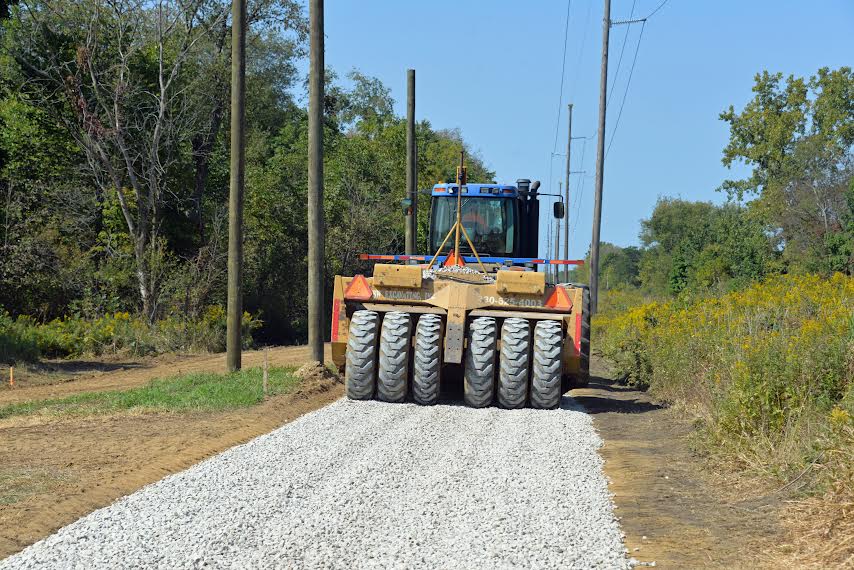
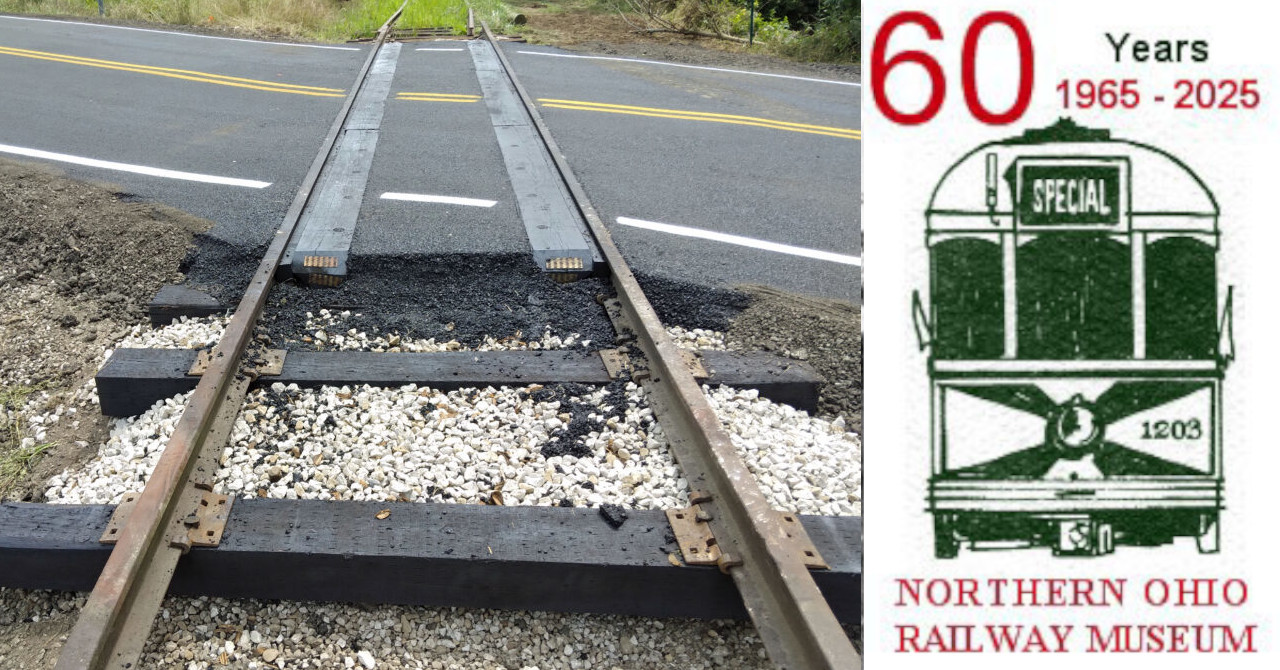
With the Main Loop project pretty much on hold, we turned our attention to the Wye area where the tracks from the main campus join our piece of the Cleveland, Southwestern and Columbus (CS&C) right-of-way. In 2023 a washed-out culvert was replaced. In 2024 we had a quarter mile of the CS&C right-of-way and one leg of the Wye graded and ballasted. We also had twenty-seven new line poles installed. In 2025, we began laying track on the right-of-way. In 2024, concurrently with the work on the right-of-way, we replaced the grade crossing in Buffham Road. Our need for more track is progressing.
By the 2024 and 2025 operating seasons, the Museum matured into our goal of an operating trolley museum. With maturity comes responsibility. Starting in 2023, we began reviewing the legal documents that define and govern the Museum. We started with our Bylaws. Our directors held several meetings where our Bylaws were reviewed and compared to those of other museums. Proposed changes were written as amendments which were sent out to the membership for approval. We then reviewed the various policies and procedures that have been developed over the years.

One of the biggest responsibilities of the Museum is knowing where it’s going. In 2024 the directors developed the Museum’s first strategic plan. This was a monumental effort that proposed what the Museum would look like in the year 2030. While most plans in the past have been short term, the strategic plan is looking five years into the future and proposing how we are going to get there. In 2025 our web site was completely redesigned. One of the new tabs is one labeled Administrative. On that tab you will find all of the documents just mentioned.
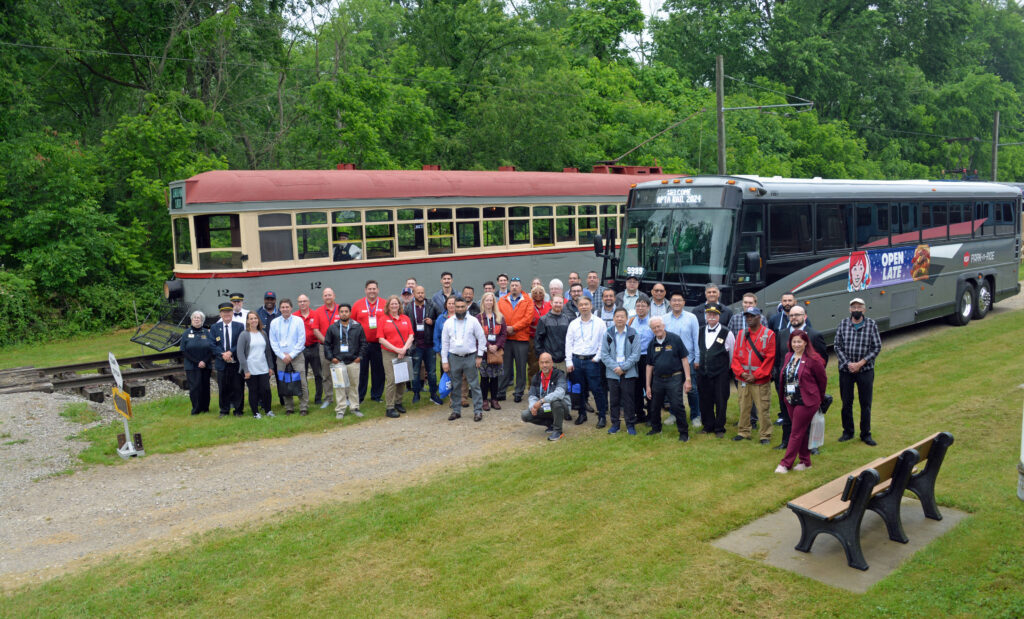
With maturity comes recognition. One of the running jokes at the Museum is that we are the best kept secret in Medina County. Well fortunately, the word is getting out. Over the last couple of years, we have had visits from community and regional groups that show this. In 2024 the American Public Transit Association held their convention in Cleveland. We were asked to be technical tour for the attendees. One afternoon, two busloads of attendees from all over the country visited the Museum and rode historic cars that once ran in Cleveland. On another occasion, we were a historical stop for Leadership Medina County. This group, led by one of the county commissioners, is a training ground for the county’s future leaders.
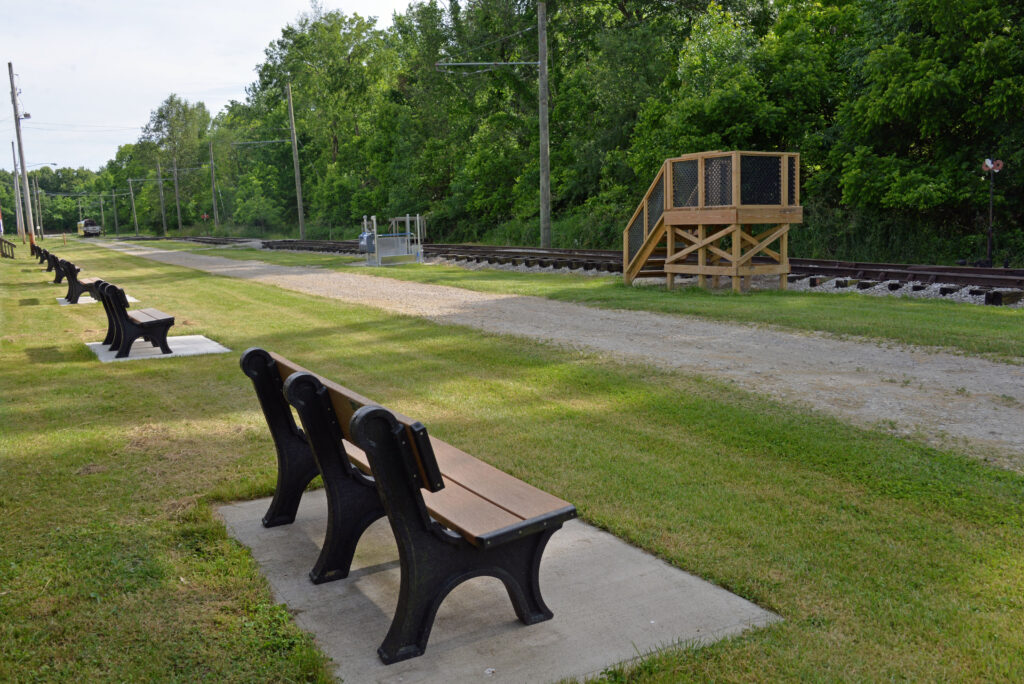
With maturity comes acceptance. Over the last few years, the Museum has participated in the 2023 Fall Foliage Tour and two Dandelion Tours. These have brought hundreds of new visitors to the Museum. Various antique auto groups have visited the Museum. One in particular was the Vintage Motor Club of America’s with their one- and two-cylinder cars. This group collects cars made in the 1890s through 1910. All arrived under their own power. The local Boy Scout troops have found the Museum a good place to earn their Eagle Scout Awards. The Museum’s memorial benches were developed by three scouts seeking their Eagle Scout Badge. The Museum also holds training sessions for the Boy Scout railroading merit badge. In 2025, the Museum appeared on a segment on railroads on WVIZ TV’s Applause show.
The 2020s are another one of those decades where it is hard to put your finger on just one event as the most significant. The Museum shut down and reopened after a national pandemic. And then it got even better than it was before the pandemic. Our operation has matured and the Museum is that much better for it. This is only the first half of the 2020’s. I think I will hold my opinion on what the most significant event was until December 31, 2029.
| By the Numbers | 2019 |
|---|---|
| Members | 143 |
| Cars/Carbodies | 56 |
| Land (acres) | 63 |
| Track (total) | 7700 feet |
| Track (operating) | 2000 feet |
| Overhead Wire | 3250 feet |
| Buildings (permanent) | 3 |
| Net Worth | $1,429,631 |