The Electric Streetcar Comes of Age
Last week, we looked at the first commercial electric street railway, Cleveland’s 1884 Bentley-Knight installation. At about this same time, there were other attempts at creating a successful electrically powered transit systems, notably those of Werner Siemans, Leo Daft, Magnus Volk and Charles Vandepoel. But, while all showed promise, none was quite reliable enough for public transport. Thus, although very promising at first, the Bently-Knight system was discontinued early in 1885.
The breakthrough came in 1885 when Frank Sprague built the first reliable electric motor, and followed by developing a motor mounting that provided both good power transmission to the wheels and protection against excessive jarring. Combined with an overhead trolley wire and a spring-loaded pole, successful installations in Richmond and in Boston demonstrated the practicality of Sprague’s system. It rapidly began to replace horses for street railway operation in cities around the country.
Cleveland was an early convert to Sprague’s system when the East Cleveland Street Railway adopted it for the Euclid Ave line in 1888. However, at that time there still were many who didn’t trust or understand electric traction. Acceptance of electric streetcars wasn’t instantaneous, and some new horsecar lines were opened after the first electrics were successfully in operation. But electrification continued to gain acceptance and to spread throughout the city, and the previously mentioned cable lines were converted in 1901. Cleveland had become an electric streetcar city!
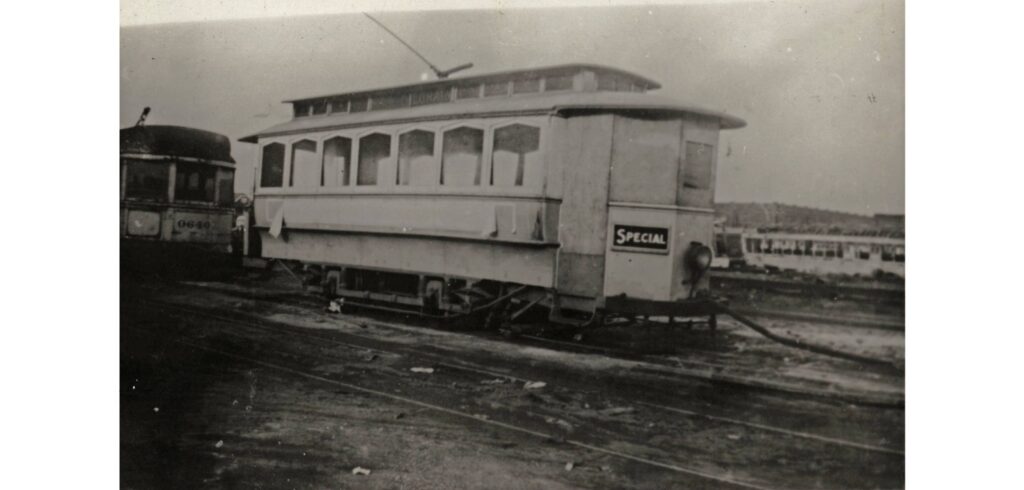
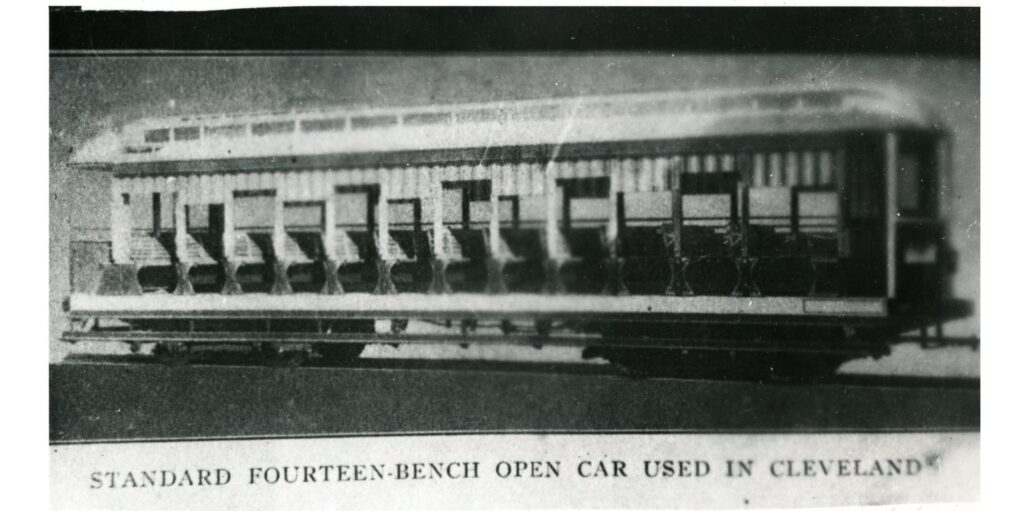
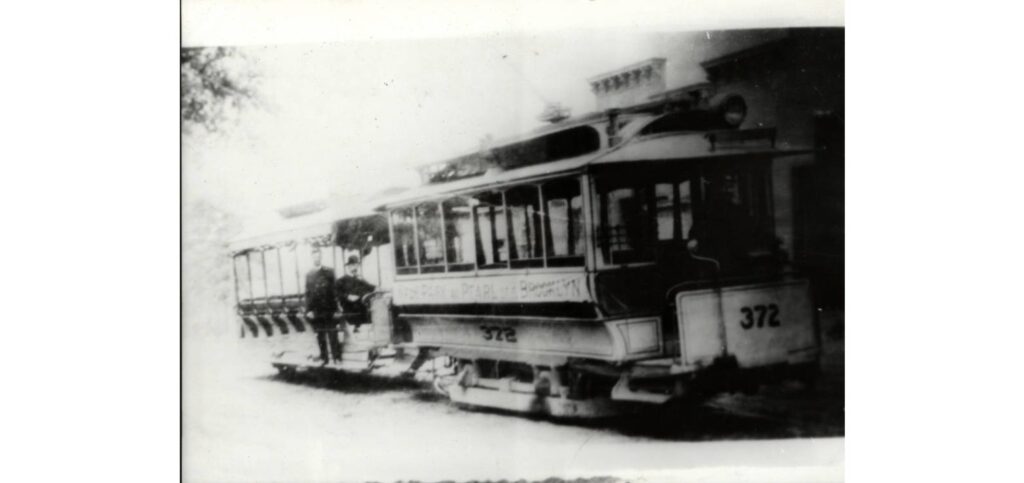
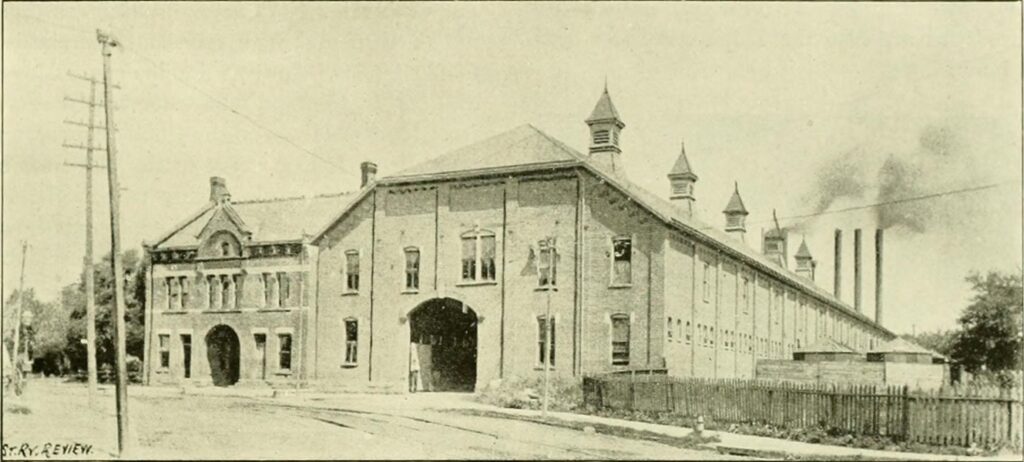
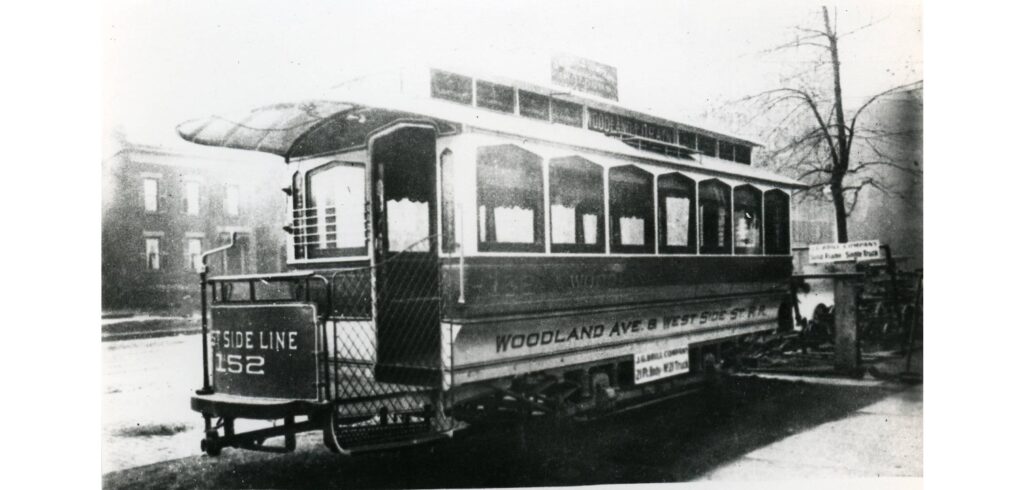
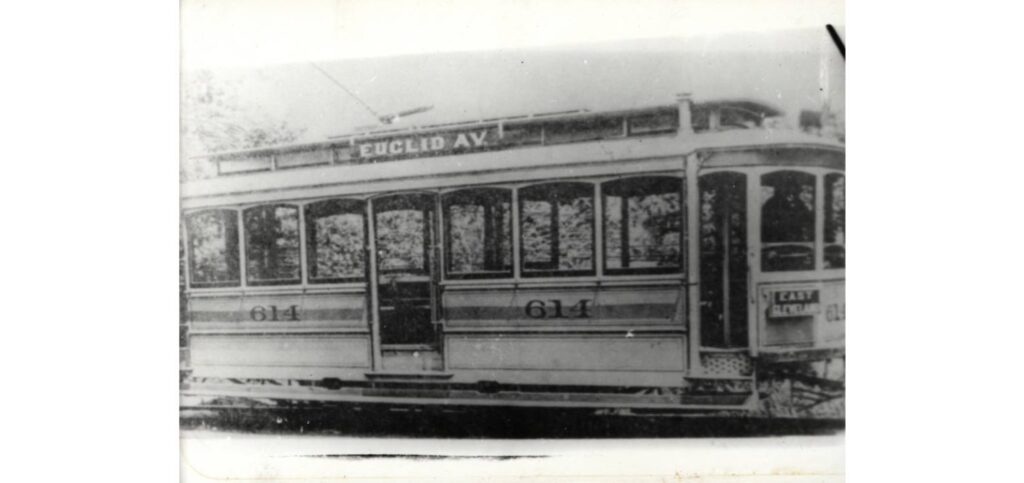
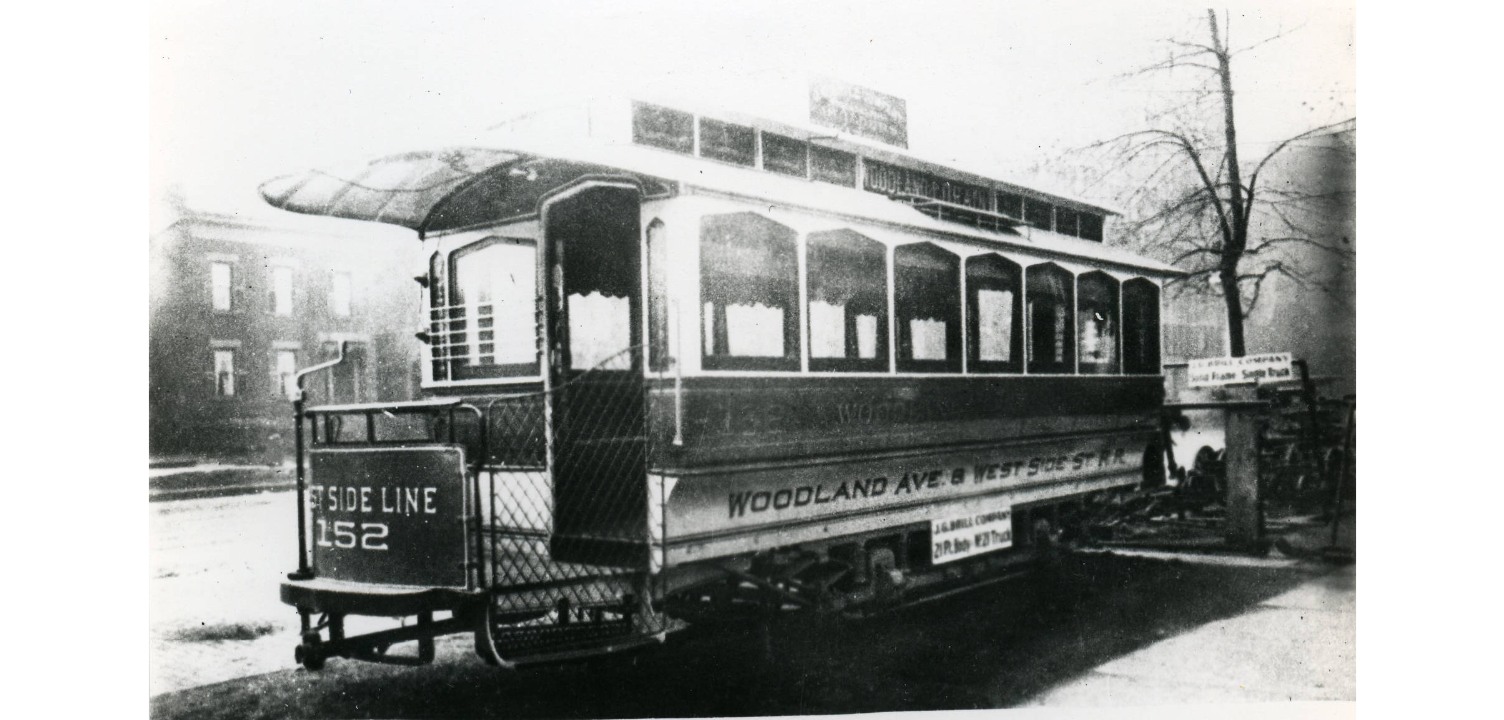
Pictures, all Columbus Metropolitan Library with attached id’s, show 1) East Cleveland Ry #614 on Euclid Ave, c1890, 2) #372 and trailer on the Wade Park. Pearl St & Brooklyn line, 3) Woodland Ave & West Side Ry, 4) early Cleveland streetcar, not identified, 5) Broadway & Newburg Street Ry powerhouse and a Cleveland open car from the 1890’s.