
Dr. Charles Grafton Page, 1812 – 1868 was born and raised in Salem MA, giving him ready access to the Salem Athenaeum, one of the best libraries of the day. He graduated from Harvard in 1832 and completed medical school in 1836, becoming a physician. He had been interested in electricity from childhood, doing electrical experiments and reading works by Faraday and by Henry on electric induction and became recognized as a scientist, developing the prototype of the induction coil and an early transformer.
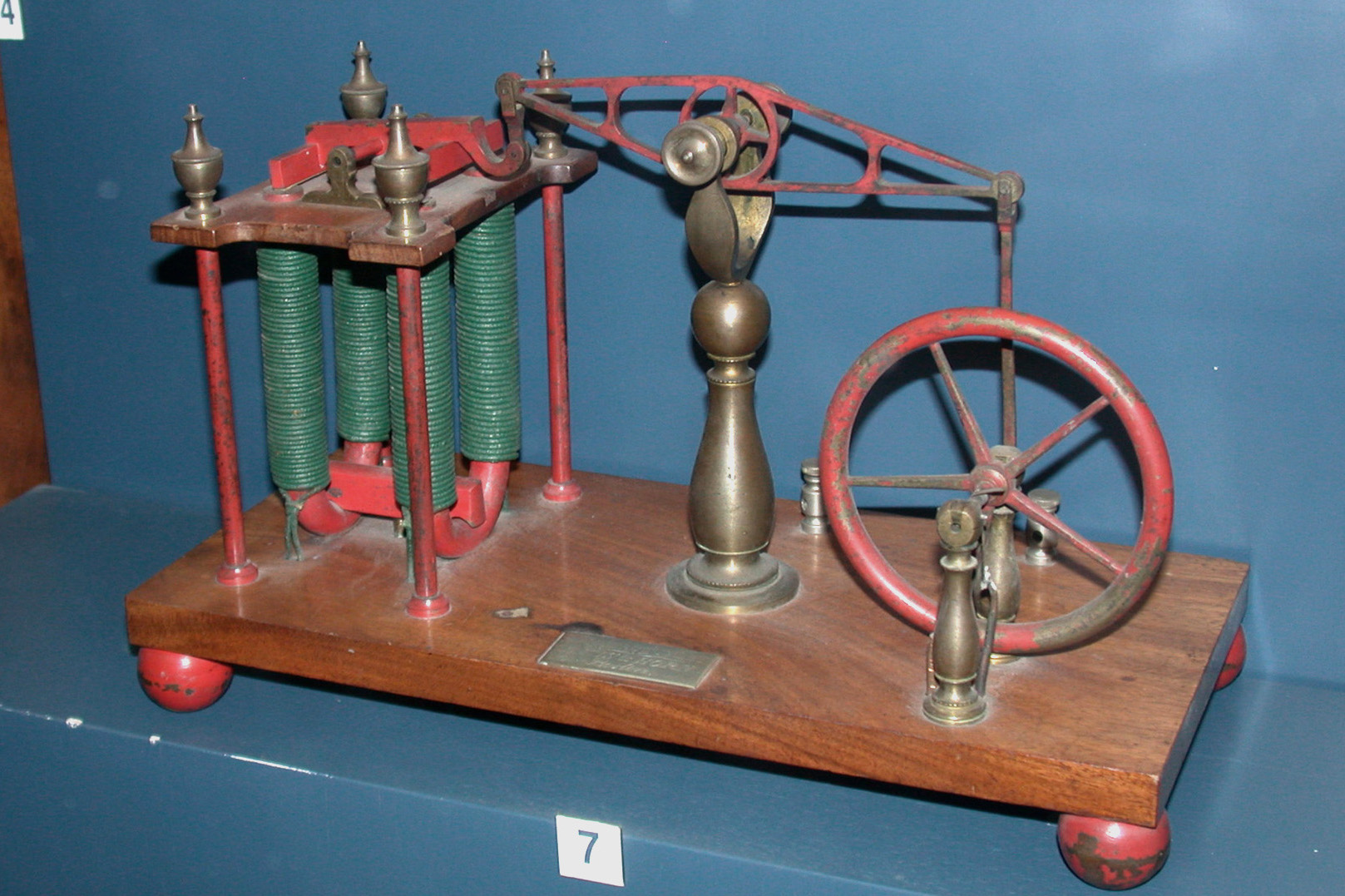
Beginning in 1838, he built a number of effective electric motors, using a pair of induction coils as electromagnets. This motors operated by alternatively switching an electric circuit back and forth between each coil, thereby alternately attracting a pivoted rod to each, and using this movement to switch the current, as later used with an electric buzzer. By linkage from this movement, he was able to create rotary motion that could drive machinery.
He was appointed as an examiner for the US Patent Office, moving to Northern Virginia, also lecturing on magnetism. In 1850, he received a sizable Congressional grant to build an electric railway from Washington DC to Bladensburg. MD, 51/2 miles. His locomotive was a sizable machine, weighing 2,100 lb, with 5′ drivers. He used battery power – there was, as yet, no effective electric generator – and, as with other attempts at electric traction of the time, this is where he failed.
The locomotive, itself, had ample power to pull a reasonable load, climb a hill and achieve a speed of 19 mph, but the batteries soon failed. Already in debt in from constructing the locomotive, he was unable to get more funding and remained in debt rest of his life. He continued with his research for several more years, but gave up after a group of Union soldiers destroyed his lab and equipment in 1863. He spent the remainder of his life trying to recover royalties for use of his numerous patents, including from Western Union Telegraph Company. Shortly before his death, his patent rights were recognized and his descendants were able to receive payment.
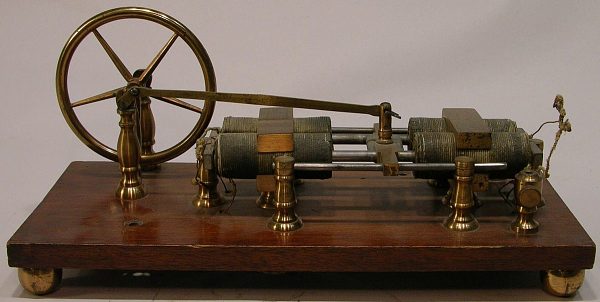
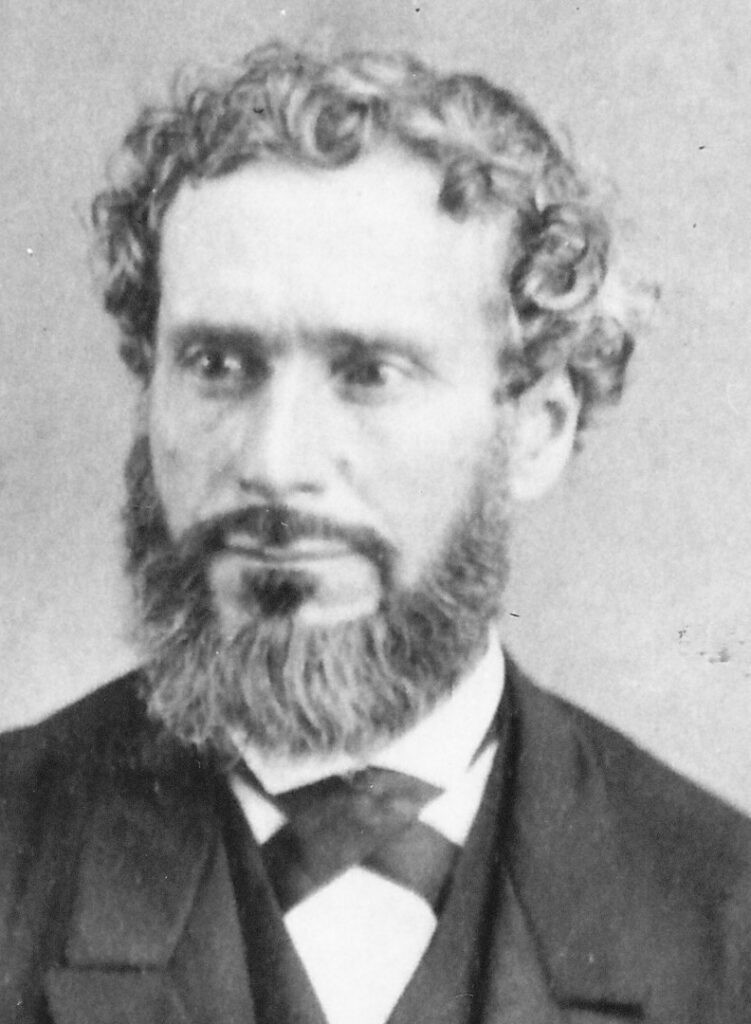
Pictures: 1) Page’s 1840 patent model, Smithsonian Museum, 2) Page’s 1853 motor, National Museum of History 3) Dr. Page, Wikipedia Commons,