In their era, horsecar operations could earn profits of, perhaps, 8 or 9% annually. If not spectacular, this income was more than sufficient to keep them operating and to encourage construction of new lines. However, in most communities, horsecar operations were small, often consisting of only a single line. Because they were fairly cheap to construct, there was temptation for others to build competing lines, sometimes only a block or two away. Also, the cars, themselves, were small and slow, necessitating that there be a large number of them and of their accompanying crews and draft animals. All of these factors limited profitability.
But, the greatest limitation on profitability was the cost of operating with animal power. Horses or mules, as the case might be, were expensive to purchase, to feed and to care for. Because the work was very strenuous, the animals needed to be replaced every few years. Also, they could work for only a few hours per day, requiring a company to maintain more horses than there were cars, perhaps 10 times as many. Additionally, there was the problem of keeping the horses healthy. The companies were careful to provide good care for their horses in order to protect their investment, so that health wasn’t a great problem until, suddenly, it was. More about this next week.
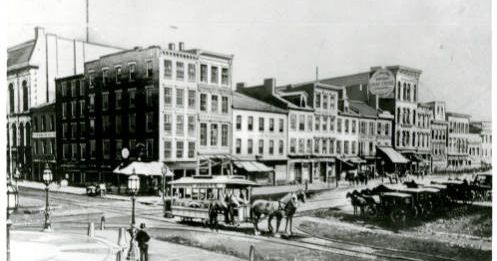
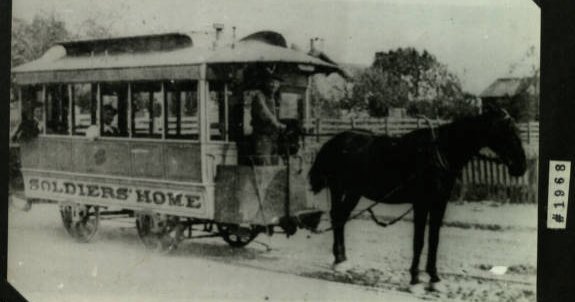

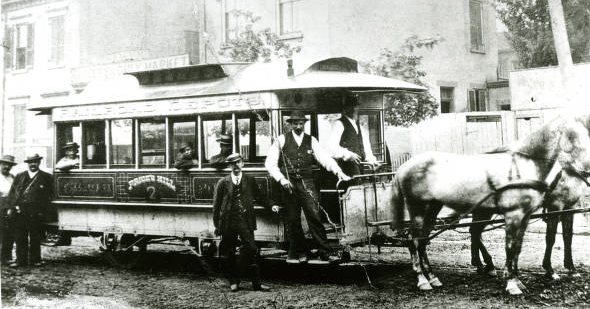
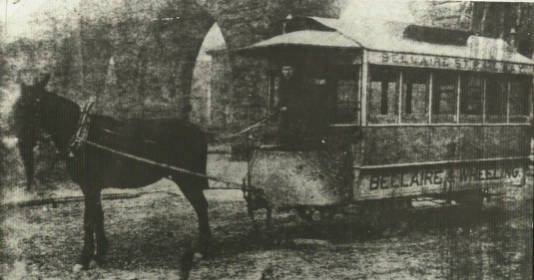
Pictures, Columbus Metropolitan Library: 1) Bellaire Street Railroad Company, horse car #1, 2) Cincinnati Street Railway Company horse car #7, 3) Cincinnati Street Railway horse car and crew 1880, 4) City Railway Company, horsecar #1, Dayton, & 5) Cincinnati Street Railway Company horse car in downtown.