In earlier posts, we’ve discussed how many interurbans, especially in later years as passengers were lost to automobiles, carried freight to gain badly needed income. As we’ve explained, much interurban freight was in the form of small packages and other relatively small lots that could be carried on passenger, on combination passenger/baggage cars or on special interurban freight cars, often in the form of express shipments.
But some interurbans also carried carload freight in ordinary railroad freight cars. The frequency of this practice varied greatly from line to line, for several reasons. A major barrier to movement of ordinary railroad freight by interurban was that many of the steam railroads regarded the interurbans as interlopers, and simply refused to interchange freight with them. Another barrier to interurban freight haulage was that interurbans typically passed through towns on public streets, and the towns objected to freight trains on their streets, even when electrically hauled. Finally, many of the interurbans were cheaply built; in order to be economically viable when traffic potential was low, building costs had to be kept to a minimum. Thus, they often had flimsy track, sharp curves, and/or steep grades that weren’t amenable to heavy freight traffic.
However, when interurban lines served places that steam railroads didn’t reach and when their infrastructure was suitable, they often transported freight as part of the national rail network. Thus, railroad freight cars began to appear on some interurbans. These cars sometimes were hauled by the same interurban box motors that carried their express traffic, but in some cases the interurbans owned small electric locomotives that could handle short trains of cars.
At NORM, we own a locomotive of this type, along with a freight car and a caboose from the interurban era. Someday, we hope to be able to recreate an interurban freight train.
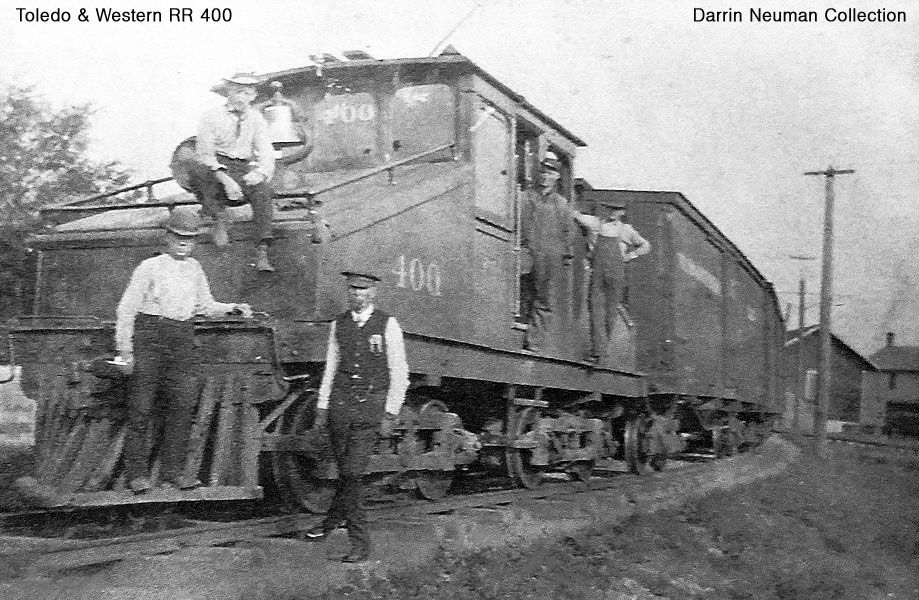
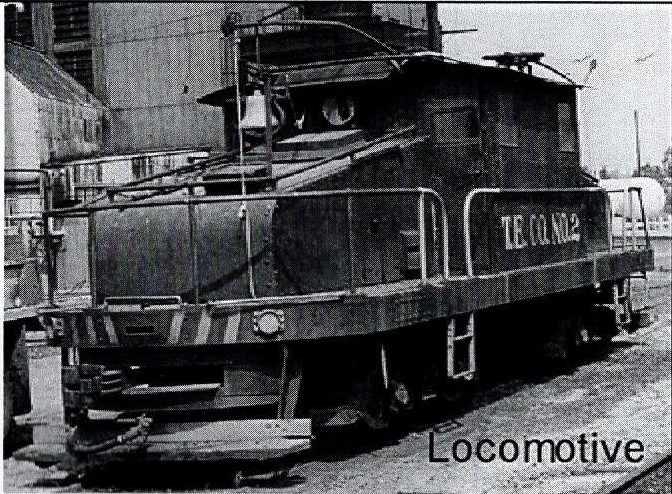
Pictures: 1) Toledo & Western freight train, Columbus Metropolitan Library. 2) Toledo Edison #2, now at NORM, NORM archives. Although this locomotive was used for switching, it is identical to many that were used to haul interurban freight,