Today, we are familiar with the advantage of being able to package freight into containers that can be transferred between different forms of transport — railroads, trucks and ships. This ability makes it convenient to use the appropriate form of transport as goods are moved from point of origin to destination without having to “break bulk,” i.e. to unpack and repack those goods every time they transfer from one form to another. In the same way, “piggyback” has sometimes been used, where trailers, wheels and all, have been carried on railroad cars and then run off to be hauled to their destination by trucks.
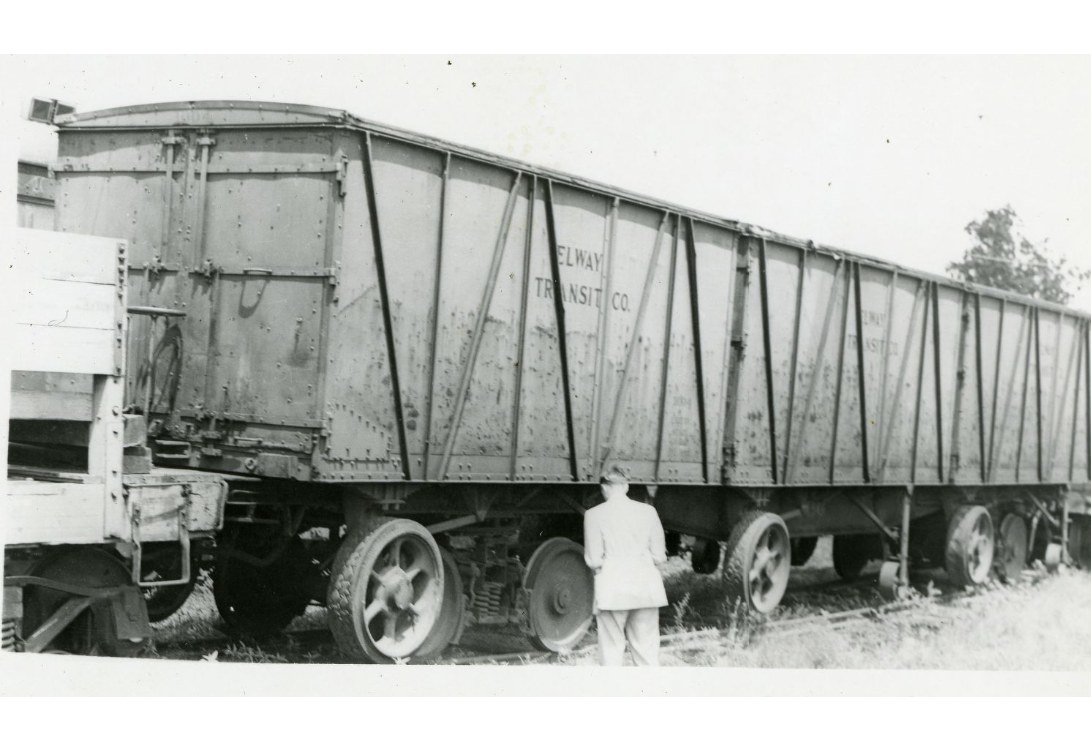
What is less known is that, beginning in 1922, long before it became common practice on main line railroads, some electric interurbans began a piggyback service, enabling “door to door” delivery. Piggyback was extensively used on the Wisconsin, Illinois and Indiana Chicago North Shore & Milwaukee and the Chicago, South Shore and South Bend” interurbans. It was attempted in 1930 on Ohio’s Lake Shore Electric Ry, using a technologically advanced system developed by J.C. Bonner. This system was based on a specially designed railway car was to be used in conjunction with Elway Transit Co, LSE’s subsidiary trucking operation. However, a patent disagreement and subsequent regulatory problems ended the attempt.
The picture, Columbus Metropolitan Library, shows the Bonner car and road trailers.