
There were some horrendous wrecks on streetcar lines, especially on some of the interurbans. But how dangerous were they, really? Data show that, overall, streetcars had quite a low accident rate when compared against the number of passenger miles of service. As an example, in 1902, federal figures show that there were 1218 fatalities associated with streetcar operation, 831 pedestrians, 265 passengers and 122 employees. This figure may seem very large until we consider that, in that year, trolleys in this country carried 5.8 BILLION passengers!* And this was before the adoption of the much safer steel cars.
Nevertheless, in spite of what really was a very good safety record, operating companies paid a lot of attention to safety features. Open platforms were first given gates and then doors to prevent people leaving — or falling from — moving cars and the once-popular open cars were much less used. Car construction was improved to provide much greater safety if an accident did occur as, for example, by replacing fragile wood construction with steel. A wide range of “fenders” — cow catchers to catch people, if you will — became available, and were widely employed. Air brakes became standard, as did the ability of cars to sand the rails to reduce skidding.
Companies also worked to get their crews to operate the cars safely, adopting extensive sets of rules to bring about safe operation and requiring crews to be thoroughly familiar with them. Companies also conducted public safety campaigns to discourage dangerous activity by non-employees. Similarly, equipment was carefully maintained until, near the end of the streetcar era, financial problems resulted in much deferred maintenance. At that time, the fact that there were not a lot of serious accidents speaks well for the care of the operating crews.
*Rowsome, F. “Trolley Car Treasury.”
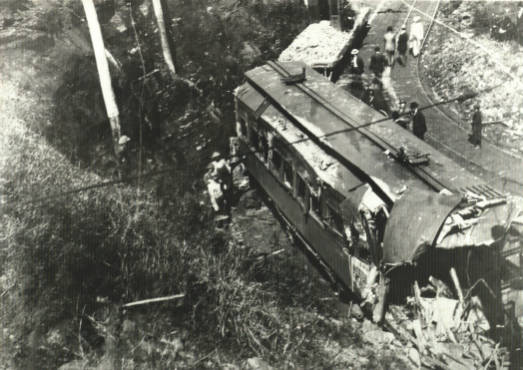
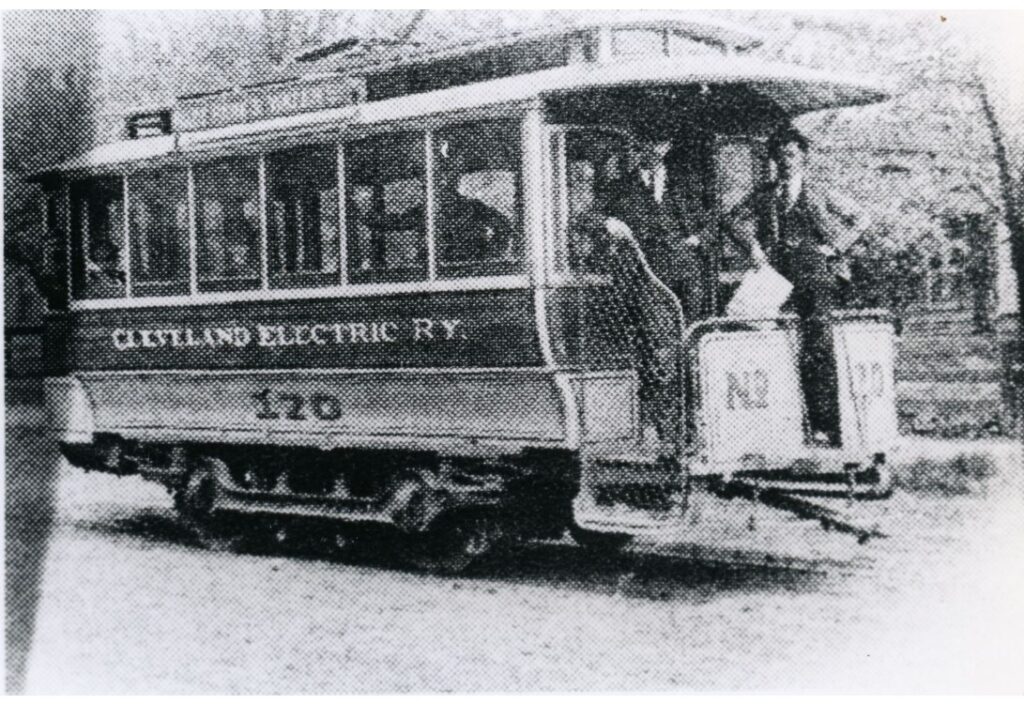
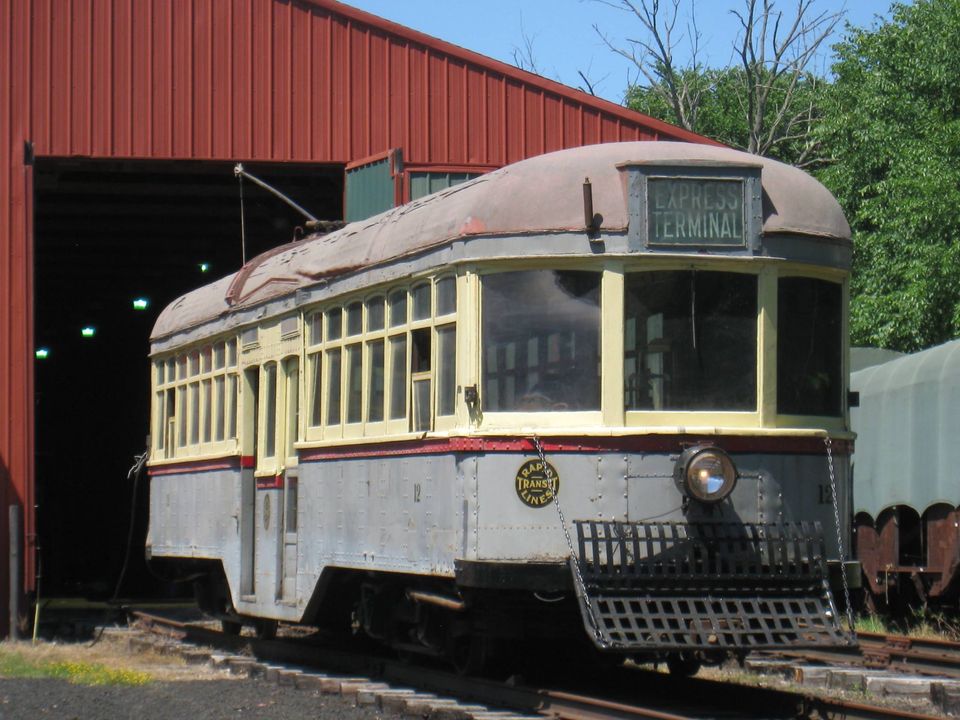
Pictures: 1) Steubenville, E Liverpool & Beaver Valley, The fragility of wooden cars posed a real danger. Fortunately, such accidents were relatively rare, 2) Gate added to open platform car, Both pictures, Columbus Metropolitan Library, 3) Fender, SHRT #12, NORM collection.