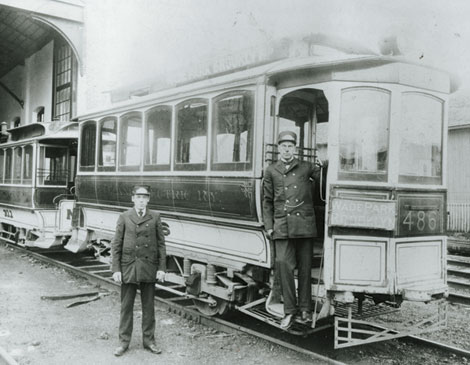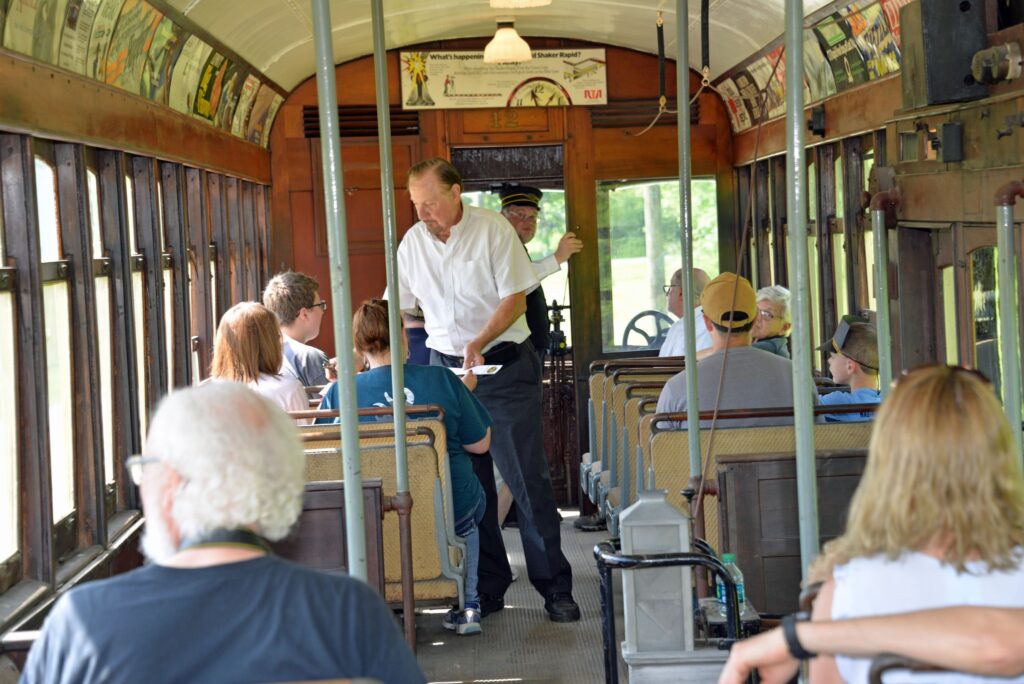
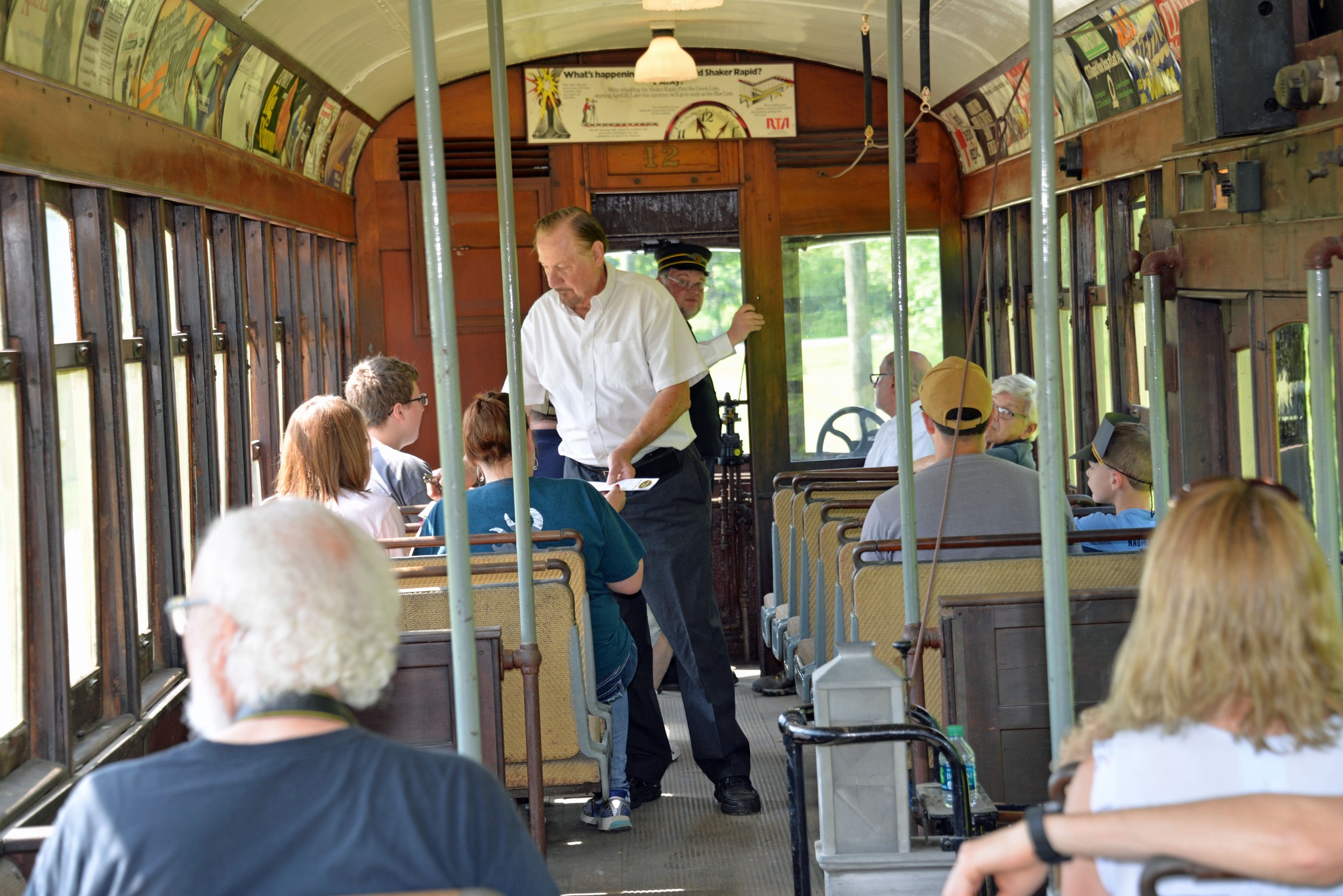
From their earliest days and for many years afterwards, trolleys carried a two man crew. This arrangement made sense for the operating companies before the development of mechanized fare collection equipment because it ensured that all fares all were collected.
The public, concerned about potential dangers from the electric cars that were much heavier and faster than anything previously operated on the streets, believed a two-man crew to be safer. For this reason, the franchises that allowed trolleys to operate on city streets invariably required a two man crew for all cars.
The responsibilities of these two men followed the practice long used by steam railroads. The conductor was much more than just the guy who collected fares. Rather, he was the “boss” of the car, with overall responsibility for operation and safety. The car was not to start until he approved, it was to stop when and where he dictated, and he could order to car to stop if he felt it was being operated unsafely.
The motorman, like the locomotive engineer, was responsible for the actual operation, and had absolute authority for ensuring that the car was operated properly and safely. Although the relationship between the two men might sound contradictory, in fact it constituted a fail-safe arrangement. Either could override the other to achieve safety.