Trolley Tales
At the Northern Ohio Railway Museum, we believe history is meant to be experienced, not just studied. Trolley Tales is our digital gallery of stories, photos, and research dedicated to the rail lines that once connected our communities. From the technical details to the memories of passengers who rode them, these tales are your gateway to Ohio’s rich railway legacy. We invite you to explore the archives here, and then visit us in Seville to see these historic treasures in person.
-
Service Extenders
These can be either persons or devices that increase the output or coverage of an individual. For example, a machine may be able to increase greatly the output of a single worker, and this increased output typically makes it possible for that worker to earn more money. The electric streetcar was a service extender. Compared…
-

Interurbans and Steam Railroads
When interurbans first appeared, steam railroads had already been operating for about 65 years, and had become a key part of the American economy. They had been over-built in many parts of the country and were engaged in fierce competition. Thus, they did not welcome the interurbans, which they regarded as interlopers – as additional…
-
Farmers Who Opposed Interurbans
Last week we discussed how many farmers benefitted financially from the arrival of interurban service. Some even agreed to provide free land for a right of way in order to encourage a line to come past their farm. However, there also were farmers who bitterly opposed lines wishing to cross their land. In one case,…
-
Interurban and the Farmer
In the 1890’s, when the first interurbans were built, farms could be, truly, isolated. In today’s age of automobiles and improved roads connecting almost every corner of the country, it may be hard to conceive just how isolated were most farms, even those within 20 or 30 miles of a large city. Even small towns…
-
More Carbarns
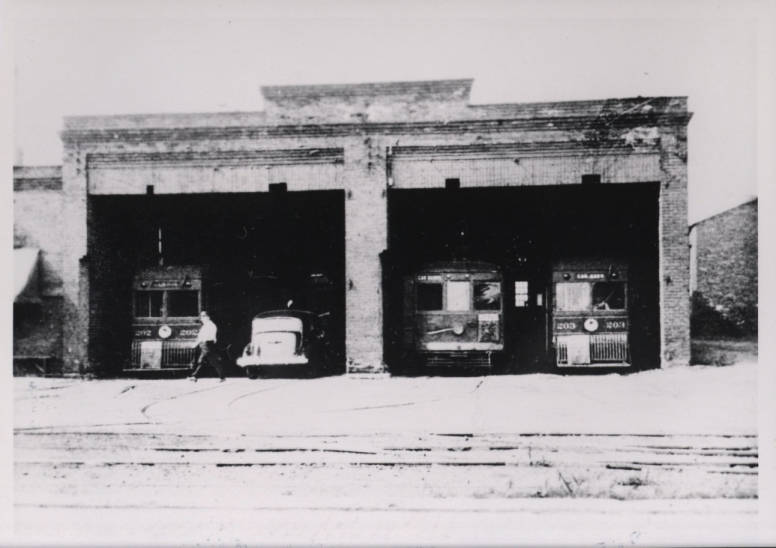
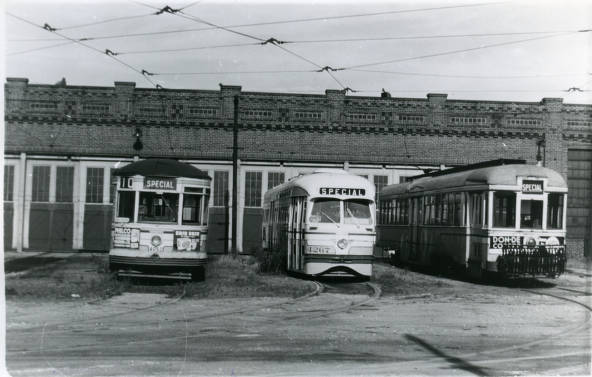
Last week we looked at the car barns of Cleveland after the formation of Cleveland Railway. Of course, all trolley systems needed barns and maintenance facilities. Here are a few more city facilities located in Northern Ohio. Akron’s Northern Ohio Traction & Light, later Akron Transportation Company’s Kenmore barns and shop was a major operation.…
-
Cleveland Car Barns
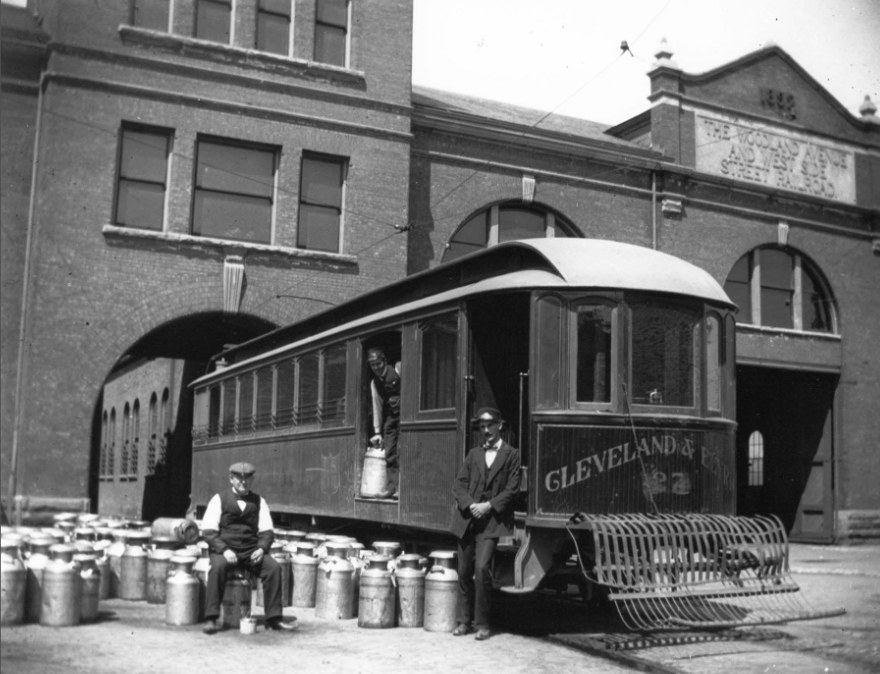
Or Car Houses or Operating Stations, if you prefer: As with all trolley systems, those in Cleveland needed places to store and maintain their fleets of cars and, as with all large cities, Cleveland had a considerable number of them over the years, with each of the several companies of early days having one or…
-
A Progressive Small Town
Many smaller Ohio towns built local trolley lines in the early days, but possibly the smallest was Salem. Remarkably, it also was one of the earliest cities in the entire country to adopt electric cars, beginning service on 23 May, 1890. At that time, the population was only 5,780! The car fleet consisted of three…
-
Construction vs Operation
As with any business, the lower the costs of operating an electric railway the greater the likelihood that it would be profitable. Thus, debt load lowered profitability. As we noted last week, sometimes a line was “overcapitalized,” that is it had taken on more debt than its income could cover. Overcapitalization could occur for a…
-
Paying for the Trolley Lines
Because of the high cost of building electric railways, the promotors followed steam railroad practice, selling stock, which made the purchasers joint owners of the business and entitling them to a say in how it was run. People purchased the stock so as to share in the expected profits. However, because sale of stock diluted…
-
Small Town Informality
Big city trolley lines, just by virtue of their size, often became very impersonal, although in cases when the same crews worked for years over a residential line, this impersonality might be less. However, in smaller communities, where people were much more likely to know most of the other people, the overall atmosphere tended to…